Indoor air quality

VOC and Formaldehyde Treatment in Singapore

A targeted surface treatment for suitable newly renovated, furnished or occupied spaces where VOCs, formaldehyde or persistent odours are a concern.

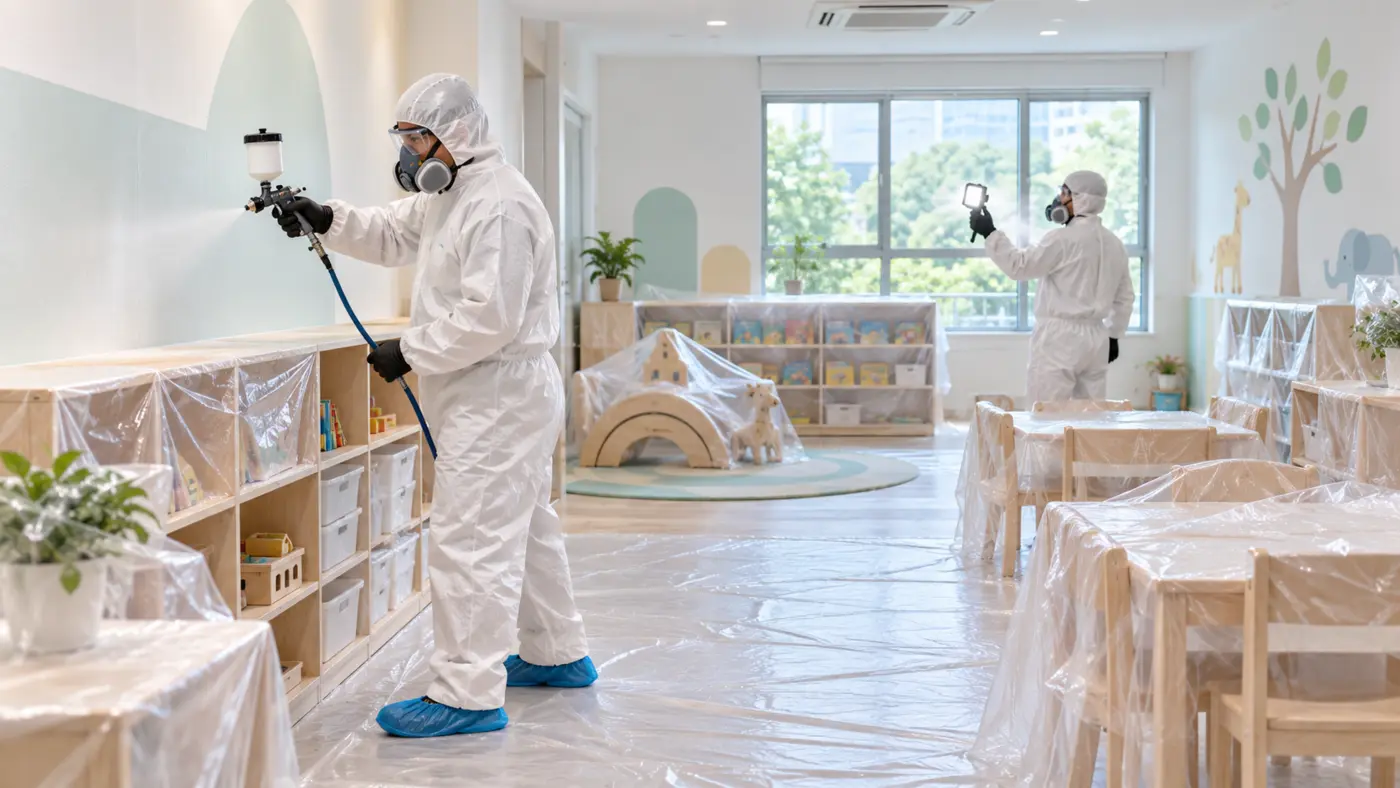
Indoor coating application in a childcare centre

Professional VOC and Formaldehyde Treatment for Indoor Environments

Looking for formaldehyde removal and VOC treatment in Singapore for a newly renovated or furnished space? Top Shield Coating provides professionally applied coating solutions designed for suitable interior surfaces where volatile organic compounds (VOCs), formaldehyde and persistent odours are a concern.

New furniture, renovation materials, paints, adhesives, finishes and other interior products can contribute to indoor VOC and formaldehyde levels. Addressing these concerns requires more than simply applying a coating. Our process begins with understanding the property, identifying potential sources and assessing suitable surfaces before recommending an appropriate treatment.

As a Singapore distributor of SmartCoat™ solutions, Top Shield Coating combines application-specific product selection, professional surface preparation, controlled application and project documentation.

What Are VOCs and Formaldehyde?

Volatile organic compounds, commonly known as VOCs, are gases released by a wide range of materials and products used indoors. Depending on the building and its contents, potential sources can include paints, adhesives, furnishings, flooring materials, cabinetry, cleaning products and other manufactured materials.

Formaldehyde is one specific chemical that can be present in indoor environments and may be associated with certain building materials, furniture and manufactured wood products.

For newly renovated or furnished properties, understanding potential sources and maintaining appropriate ventilation are important parts of an indoor environmental strategy.

Our formaldehyde treatment service in Singapore focuses on suitable surfaces where a photocatalytic coating may form part of the overall approach to managing selected indoor pollutants.

How Does VOC and Formaldehyde Treatment Work?

SmartCoat™ uses nano titanium dioxide as a photocatalytic material. According to the manufacturer, when the treated surface receives suitable light exposure, the photocatalyst activates an oxidative process designed to help decompose selected organic pollutants.

This makes photocatalytic coating a surface-based approach rather than simply covering a source with an ordinary paint or protective finish.

For VOC treatment projects in Singapore, the appropriate application depends on factors such as:

  • The suspected pollutant sources
  • Type and condition of the surface
  • Selected coating product
  • Surface preparation
  • Light exposure
  • Indoor environmental conditions
  • Application coverage
  • Ventilation and maintenance
  • Applicable testing methods

Because these factors vary between properties, Top Shield Coating assesses each project individually.

Formaldehyde Removal and VOC Treatment for Singapore Properties

A professional formaldehyde removal strategy in Singapore should begin with identifying potential sources and considering appropriate building management measures.

Depending on the property, these may include:

  • Improving ventilation
  • Identifying potential emission sources
  • Managing newly installed materials
  • Following appropriate cleaning and maintenance procedures
  • Selecting suitable surfaces for treatment
  • Considering professional coating applications
  • Conducting appropriate testing or verification

Our coating solution can form one component of this broader strategy where the substrate and environmental conditions are suitable.

It should not be presented as a replacement for source control or ventilation. Instead, the objective is to use the coating where it can appropriately complement other indoor air management measures.

VOC Removal in Singapore for Newly Renovated and Furnished Spaces

Renovation and furnishing projects can introduce multiple new materials into an indoor environment.

Offices, homes, hotels, schools and other occupied spaces may contain new:

  • Furniture
  • Cabinetry
  • Flooring
  • Wall finishes
  • Adhesives
  • Paints
  • Interior fittings
  • Manufactured wood products

Where VOC concerns exist, identifying the relevant surfaces and potential sources is an important first step.

Our VOC removal approach in Singapore considers the actual environment before treatment. We identify surfaces that may be suitable for coating and establish the appropriate application scope rather than treating every surface indiscriminately.

Formaldehyde Coating for Suitable Interior Surfaces

A formaldehyde coating application in Singapore may be considered for selected interior surfaces where the coating is compatible with the substrate and appropriate for the intended application.

Potential environments include:

Residential Properties

  • Newly renovated apartments
  • Condominiums
  • Landed homes
  • Newly furnished homes
  • Bedrooms and living areas
  • Selected cabinetry and interior surfaces

For homeowners, the treatment can be considered as part of a broader approach to managing indoor environmental conditions following renovation or furnishing.

Offices and Commercial Spaces

Commercial interiors can contain multiple sources of VOCs and other compounds following renovation or fit-out work.

Suitable applications may include:

  • Offices
  • Meeting rooms
  • Reception areas
  • Commercial interiors
  • Shared workspaces
  • Selected furniture and surfaces

Schools and Education Facilities

New classrooms, activity rooms and educational spaces may contain recently installed furniture, finishes and interior materials.

Treatment can be considered for suitable surfaces after assessing the environment and intended application.

Healthcare and Hospitality

Healthcare facilities, hotels and other occupied premises may also require careful consideration of indoor environmental conditions.

Potential applications include selected rooms, common areas and suitable interior surfaces, subject to project assessment.

Improving Indoor Air Quality in Singapore

Maintaining indoor air quality in Singapore properties requires a combination of appropriate building design, ventilation, source control, cleaning and maintenance.

A coating should therefore be considered as one part of the overall strategy.

Top Shield Coating can help assess whether a photocatalytic surface treatment is appropriate for your environment and intended outcome.

Our approach considers:

  • Potential indoor pollutant concerns
  • Existing materials and finishes
  • Surface condition
  • Property usage
  • Occupancy
  • Ventilation considerations
  • Suitable coating areas
  • Application requirements
  • Verification requirements

Where appropriate, testing can be discussed before or after treatment based on the project's requirements and applicable testing methods.

Our VOC and Formaldehyde Treatment Process

01. Assess

We begin by understanding the property, the indoor environment, the concern and the intended outcome.

02. Identify

We identify potential treatment surfaces and consider the condition, substrate and accessibility of each area.

03. Specify

The appropriate coating and application scope are established according to the project requirements.

04. Prepare

Suitable surfaces are prepared according to the substrate and condition to support appropriate coating application.

05. Apply

Trained personnel apply the selected coating using the prescribed professional application method.

06. Verify

Where applicable, completion can be documented and suitable pre-treatment or post-treatment verification options can be discussed.

This structured process helps ensure the treatment is based on the property rather than a one-size-fits-all application.

Why Choose Top Shield Coating?

Top Shield Coating is a specialist brand of Inspire Marketing Pte Ltd and a Singapore distributor of SmartCoat™ solutions.

Our approach focuses on technically appropriate specification and professional application rather than making broad claims about every indoor environment.

We consider:

  • Property type
  • Surface and substrate
  • Potential pollutant concerns
  • Application conditions
  • Coating compatibility
  • Treatment scope
  • Verification requirements
  • Ongoing maintenance considerations

This same application-specific approach is used across our other solutions, including indoor nano coating, AHU coating and solar panel coating.

VOC and Formaldehyde Treatment for Singapore Properties

Our services can be considered for a variety of indoor environments, including:

Homes

  • Apartments
  • Condominiums
  • Landed properties
  • Newly renovated homes

Commercial spaces

  • Offices
  • Retail interiors
  • Meeting spaces
  • Shared workplaces

Education

  • Schools
  • Childcare facilities
  • Training centres
  • Classrooms

Healthcare and hospitality

  • Healthcare facilities
  • Hotels
  • Guest rooms
  • Common areas

The suitability of treatment depends on the actual property, materials, surfaces and environmental conditions.

Does VOC and Formaldehyde Coating Replace Ventilation?

No. A coating should not be considered a substitute for appropriate ventilation, source control, filtration, cleaning or building maintenance.

Where VOCs or formaldehyde are a concern, identifying and managing potential sources remains important. A professionally applied coating can be considered as an additional measure for suitable surfaces within the broader indoor environmental management strategy.

Frequently Asked Questions

What is VOC formaldehyde treatment?

VOC and formaldehyde treatment refers to measures used to address indoor environments where volatile organic compounds or formaldehyde are a concern. These can include source control, ventilation, testing and, where suitable, professional surface treatment.

Can you provide formaldehyde removal in Singapore?

Top Shield Coating can assess whether a photocatalytic coating application is appropriate as part of a broader formaldehyde removal strategy in Singapore. Suitability depends on the property, pollutant sources, surfaces and environmental conditions.

What is VOC treatment used for?

VOC treatment services in Singapore can be considered for suitable indoor environments where VOCs from renovation, furnishings or other materials are a concern. The appropriate approach depends on the source and the property.

Can VOC coating remove all indoor VOCs?

No coating should be treated as a universal solution for every VOC source. Effective indoor air management can involve source identification, ventilation, material selection, cleaning, testing and other measures.

Is formaldehyde coating suitable for newly renovated homes?

It may be suitable for selected surfaces in newly renovated or furnished homes. A site assessment is recommended to determine surface compatibility and the appropriate treatment scope.

How does photocatalytic coating help with VOCs?

Under suitable light conditions, the photocatalytic material is designed to activate an oxidative process that can help decompose selected organic pollutants. Performance depends on the product, substrate, environment, application and testing method.

Can treatment improve indoor air quality?

A coating may form part of an indoor environmental management strategy, but indoor air quality concerns in Singapore should also be addressed through ventilation, source control, filtration, cleaning and appropriate testing where necessary.

How do you remove formaldehyde after a renovation?

Start with source control and ventilation, and test where needed to confirm the levels. Where the surfaces are suitable, a professionally applied photocatalytic coating can be added as a further measure. Top Shield Coating assesses the property before recommending a treatment scope.

How do I know whether my property needs VOC treatment?

A site assessment can help identify the nature of the concern, suitable treatment surfaces and whether a coating application is appropriate for your property.
Request an assessment

Request a VOC and Formaldehyde Treatment Assessment

Concerned about VOCs, formaldehyde or persistent odours following renovation or furnishing?

Top Shield Coating can assess your Singapore property, identify suitable surfaces and discuss an appropriate treatment approach.

Request a site assessment to discuss your VOC and formaldehyde treatment requirements.

Request a site assessment